
24 Fireplace Makeover Ideas That Will Transform Your Living Room (From Drab to Absolutely Stunning)
Let me be real with you — your fireplace is the most powerful design tool in your entire home, and if it’s just sitting there looking sad and forgotten, you are leaving so much potential on the table.
I’ve walked through hundreds of homes, and the fireplace is almost always the first thing people notice when they walk into a living room. It’s the natural focal point. It commands attention. But here’s the thing — so many fireplaces are just… fine. Outdated brick that hasn’t been touched since 1987. A builder-grade mantel that came with the house. A hearth that blends into the floor without any personality.
In this post, I’m sharing 24 of the best fireplace makeover ideas — from tiny, budget-friendly tweaks to bigger statement upgrades. Some are pure DIY. Others call in a pro for one or two steps. All of them are realistic, all of them work, and every single one will make your fireplace look like it belongs in a design magazine.
24 Fireplace Makeover Ideas (Core Section)
1. Painted White Brick Fireplace
If your fireplace is old red or dark orange brick and it’s bringing the whole room down, a coat of white paint is honestly one of the fastest, most affordable glow-ups you can do. It takes one afternoon and the transformation is night and day.
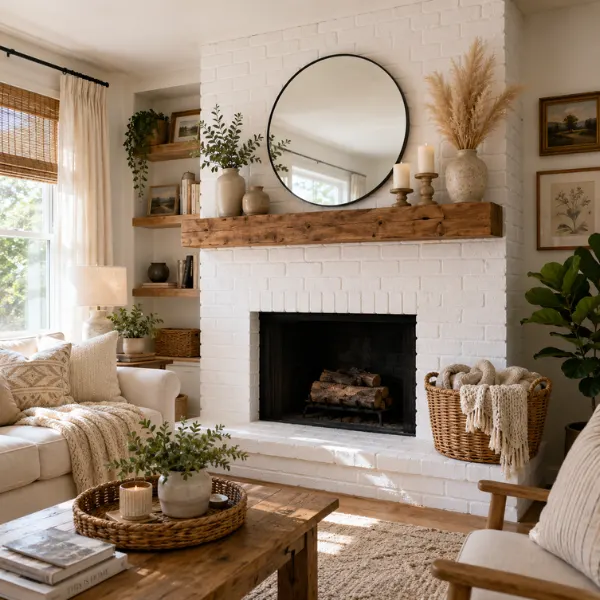
The key here is using the right paint — you need heat-resistant latex paint rated for indoor use. Don’t skip this step. Regular wall paint will bubble and peel the moment heat hits it, and you’ll be starting over.
Why It Works
White paint instantly brightens the entire room. It softens harsh, dated brick and gives your fireplace a fresh, clean slate. It also works as the perfect neutral backdrop for any decorating style — whether you go minimal or layer it with cozy textures.
Best For
Homes with traditional or dark living rooms that feel heavy and outdated. Also great for renters or first-time DIYers who want maximum impact with minimum commitment.
Styling Tips
Once the paint is dry, hang a large round or arched mirror above the mantel to reflect light. Add a chunky natural wood mantel if you don’t have one — even a floating shelf works. Pair with soft neutral throws, candles, and a simple vase of dried pampas grass. The contrast of soft organic textures against bright white brick is unbeatable.
2. Limewash Brick Finish
Limewash is what you choose when you want the look of white brick but with depth, texture, and that beautifully imperfect finish that looks like it took years to develop naturally. It doesn’t completely cover the brick — it soaks into it, letting the natural texture breathe through.
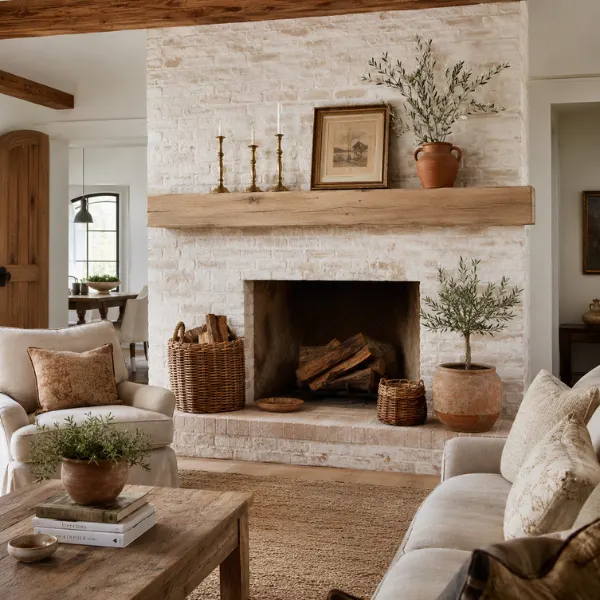
This is the technique that has taken over Pinterest and Instagram in the last couple of years, and for good reason. It’s affordable, it’s DIY-friendly, and the results look genuinely custom and expensive.
Why It Works
Unlike flat paint, limewash gives a layered, aged, almost European-style finish. It’s softer and more organic than solid paint, which makes it feel warmer and more inviting rather than stark.
Best For
Farmhouse, cottage, and Mediterranean-style homes. Also a fantastic choice if you love texture and want your fireplace to look like it has a story behind it. Works beautifully in rooms with exposed beams or natural wood floors.
Styling Tips
Let the finish dry completely before styling — it deepens in color as it cures. Pair your limewashed fireplace with a light-stained wood mantel and linen accessories. Woven baskets on the hearth, a terracotta pot, and a few vintage candlesticks will complete the whole lived-in, layered look perfectly.
3. Shiplap Surround with Chunky Wood Mantel
Shiplap around a fireplace is one of those design choices that works in practically every home style, and yet it never feels overdone. You can go horizontal for that classic farmhouse look, or vertical to draw the eye upward and make your ceilings feel taller. Either way, it adds warmth and texture that no painted wall can replicate.
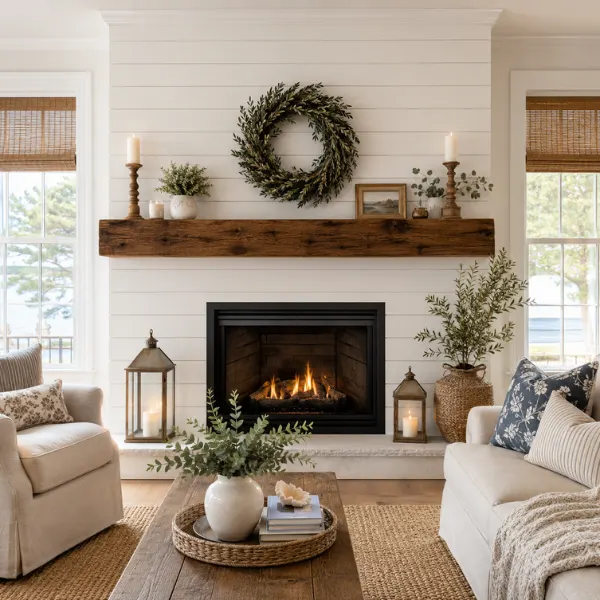
Pair it with a thick, chunky wood mantel — either a reclaimed beam you source at a salvage shop or a DIY mantel built from basic lumber — and you have an entirely new fireplace for a few hundred dollars.
Why It Works
Shiplap creates instant texture and dimension. The boards add depth to what was previously just a flat wall, making the fireplace feel intentional and designed rather than builder-grade. The wood mantel grounds the whole thing and gives it a handcrafted, curated feel.
Best For
Farmhouse, transitional, and coastal interiors. Works especially well in open-plan living rooms where the fireplace wall serves as the anchor for the entire space.
Styling Tips
Paint the shiplap crisp white or an off-white like Sherwin-Williams White Flour for a clean, timeless look. Stain the mantel a warm walnut or leave it natural. Add a wreath, a chunky clock, or a mix of candlesticks and greenery on the mantel. Flank the fireplace with lanterns on the hearth for extra warmth.
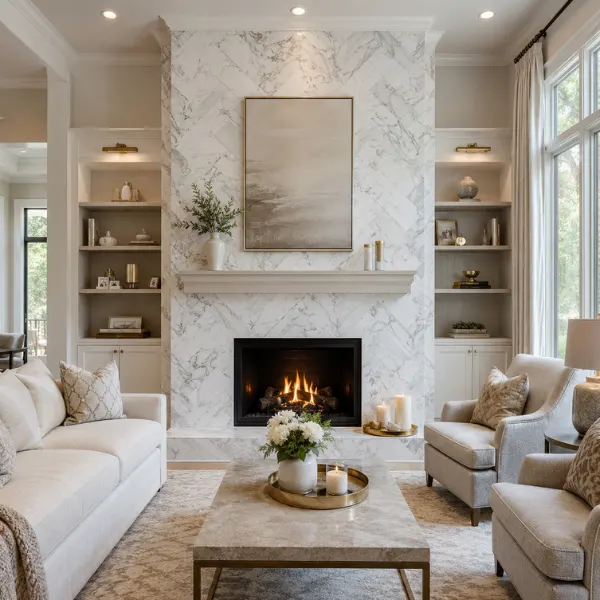
4. Marble Tile Surround
If you want your fireplace to look genuinely luxurious — the kind that stops people mid-conversation — a marble tile surround is your answer. And you don’t have to spend a fortune. Marble-look porcelain tile can give you the same dramatic, veined effect at a fraction of the cost of natural stone.
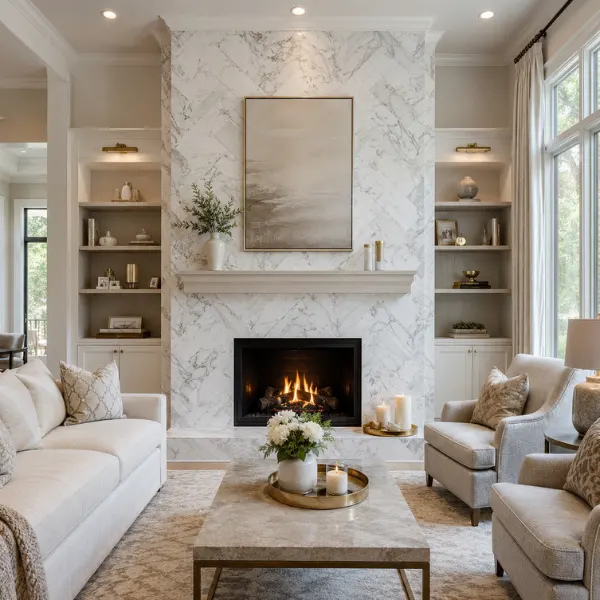
This works whether you’re tiling a brand new surround or covering up an outdated one. A classic herringbone pattern in white Carrara marble is forever chic. A large-format slab-style tile looks incredibly high-end and modern.
Why It Works
Marble has that rare ability to look both timeless and current at the same time. The natural veining creates movement and visual interest that draws the eye straight to the fireplace. It also reflects light beautifully, brightening the whole room.
Best For
Contemporary, glam, and transitional living rooms. Perfect for someone who wants their fireplace to feel truly elevated and polished without a full structural renovation.
Styling Tips
Keep the rest of the decor restrained so the marble can breathe. A slim white or champagne-toned mantel works beautifully. Add a single large-scale piece of art above, a couple of neutral candles, and a simple decorative tray on the hearth. Let the marble do the talking.
5. Herringbone Tile Pattern in the Firebox
Most people completely forget about the inside of the firebox when planning a makeover, but this is one of the most unexpected, stunning details you can add. Tiling the interior of the firebox in a herringbone pattern — whether with subway tile, brick tile, or small mosaic tile — creates a gorgeous backdrop that you see every single time the fire isn’t going.
It looks like something you’d find in a $2 million home, but it’s absolutely a DIY-friendly project if you use heat-resistant tile and the right grout.
Why It Works
The firebox is a small, contained space, which means even a few square feet of patterned tile makes a huge visual impact. It turns the inside of the fireplace into its own little piece of art — visible year-round, not just when there’s a fire.
Best For
Any fireplace where you want to add detail and depth. Works especially well with gas fireplaces where the firebox is clearly visible when not in use.
Styling Tips
Keep the exterior surround simple — clean white or a smooth stone — so the herringbone interior pops when you look inside. Use a contrasting grout color (dark grout with light tile, or vice versa) to make the pattern really stand out.
6. Floor-to-Ceiling Stacked Stone
This one makes a statement. We’re talking stacked natural stone that runs all the way from the hearth floor straight up to the ceiling, turning your fireplace wall into a full architectural feature. It’s the kind of look you’d expect to see in a mountain lodge or a high-end ski chalet — but it works just as powerfully in a suburban living room.
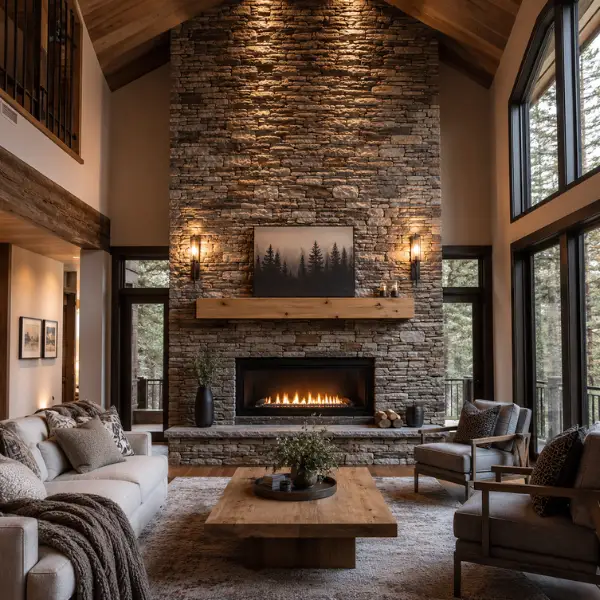
You can do this with real natural stone or with cultured stone (manufactured stone veneer), which is lighter, more affordable, and much easier to install.
Why It Works
The height of a floor-to-ceiling treatment makes a room feel grander, more intentional, and more custom. The texture of stacked stone adds incredible depth and warmth that no other material quite replicates. It reads as both rugged and refined.
Best For
Rooms with high ceilings. Great in mountain homes, craftsman bungalows, rustic-contemporary spaces, and large open living areas that need a dramatic anchor.
Styling Tips
Let the stone be the star — keep the mantel simple and minimal, in a light or natural wood tone. Add warm Edison bulb sconces on either side to highlight the texture of the stone at night. A simple, low-profile hearth with a clean stone slab completes the look.
7. Modern Concrete Plaster Finish
If your style leans clean, contemporary, or even a little industrial, concrete plaster might be exactly what your fireplace needs. This finish involves applying a smooth layer of plaster or concrete overlay directly over existing brick or tile, transforming it into a sleek, matte, almost sculptural surface.
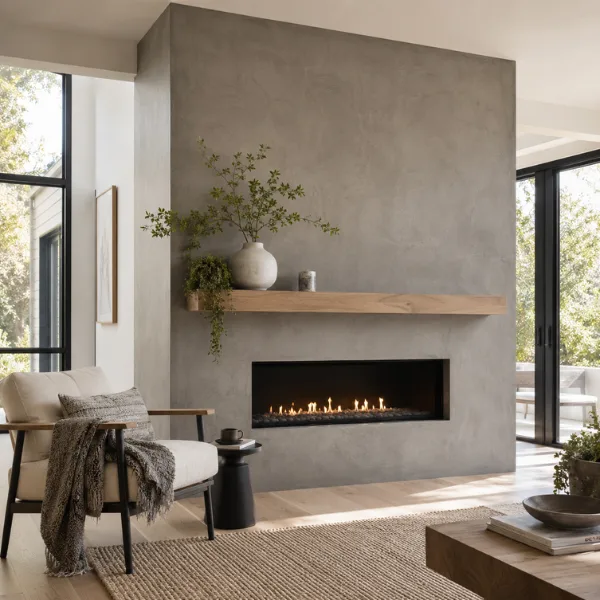
It’s increasingly popular in modern and Scandinavian-inspired homes, and it works because it doesn’t try to compete with anything. It just is — calm, grounded, and quietly sophisticated.
Why It Works
Concrete gives you a texture-rich finish that still reads as minimal. It doesn’t shout, but it has presence. It also works as the perfect neutral backdrop for bold artwork or lush plants, letting you shift the styling around it seasonally.
Best For
Minimalist, contemporary, industrial, and Scandinavian-style interiors. Great for homes that are already using concrete, exposed metal, or raw materials elsewhere in the design.
Styling Tips
Pair a concrete-finished fireplace with a floating wood shelf for a minimal mantel. A single oversized ceramic vase, a trailing plant, and a concrete or stone candle holder are all you need. Let the simplicity be the statement.
8. Patterned Moroccan Tile Surround
This is for the homeowners who are done playing it safe. A Moroccan or encaustic cement tile surround is bold, colorful, and completely full of personality — and it transforms your fireplace from a background element into the undeniable centerpiece of the room.
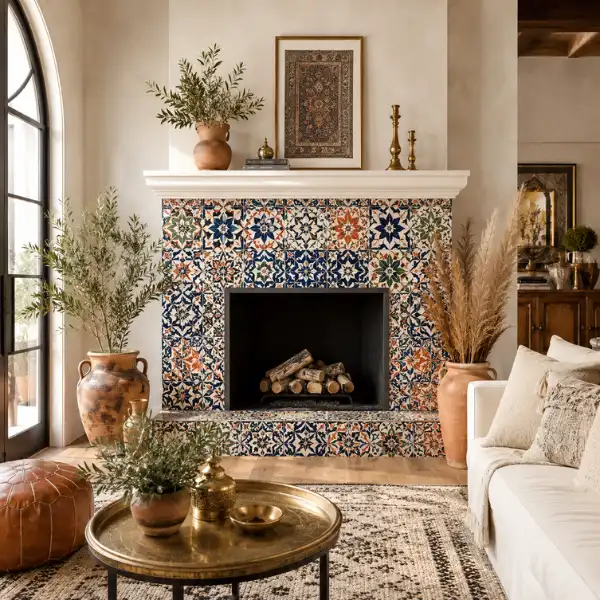
These tiles typically come in geometric patterns in shades of navy, terracotta, sage, cobalt, and cream. Even a narrow band of patterned tile around the firebox opening makes an enormous visual difference.
Why It Works
Patterned tile tells a story. It adds personality, culture, and artistry in a way that solid materials simply can’t. In a neutral room, it becomes the one piece of “artwork” that anchors everything else.
Best For
Eclectic, bohemian, Mediterranean, and maximalist interiors. Perfect for homeowners who love color and want their home to feel unique and collected rather than catalog-perfect.
Styling Tips
Keep the surround, mantel, and wall simple — white or cream — so the tile has room to breathe. Add terracotta pots, handwoven textiles, and brass or copper accents to echo the tile’s earthy palette. Less is more everywhere else when the tile is this rich.
9. Built-In Shelves Flanking the Fireplace
Framing your fireplace with built-in shelving on both sides is one of the best design decisions you can make for a living room. It takes a fireplace from being a standalone element and turns the entire wall into one cohesive, intentional feature. It also adds real, functional storage and display space.
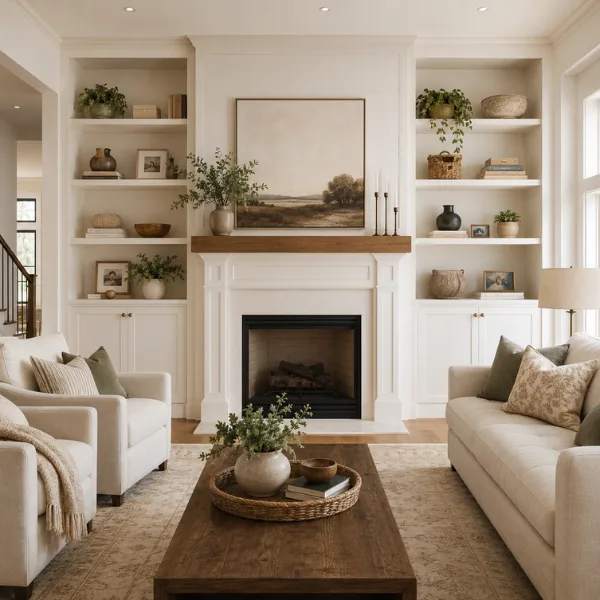
You can build these yourself with basic carpentry skills and a weekend, or have a carpenter do it for you. Either way, the return on investment — both in style and in home value — is significant.
Why It Works
Built-ins create symmetry, and symmetry creates calm. They also give your fireplace weight and importance within the room, making it feel like the true focal point it deserves to be rather than something that got added as an afterthought.
Best For
Living rooms, family rooms, and studies. Works in traditional, transitional, and even modern spaces depending on the design of the shelves themselves.
Styling Tips
Paint the built-ins the same color as the wall for a seamless, custom look — or go white for a crisp, classic feel. Style the shelves with a mix of books, plants, framed photos, and objects at varying heights. Don’t fill every shelf to the same level — leave breathing room and vary the scale of what you display.
10. Reclaimed Wood Beam Mantel
There is something about a thick, weathered, reclaimed wood beam above a fireplace that just feels right. It has weight, character, and history built right into it — the kind of patina and texture that you simply cannot fake with new lumber. The knots, cracks, and grain variations make every single one completely one of a kind.
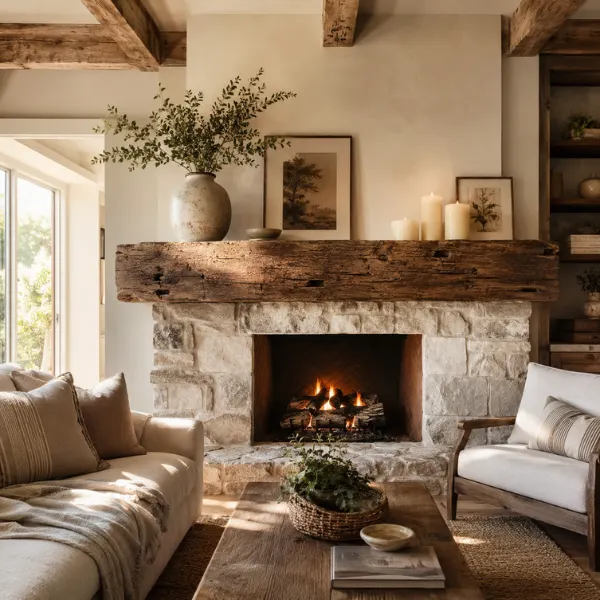
You can source real reclaimed beams from architectural salvage shops, barn wood suppliers, or even local Facebook Marketplace. Or you can build a faux version using new lumber and the right staining and distressing techniques for a fraction of the cost.
Why It Works
A reclaimed beam instantly adds warmth and authenticity. It balances out slick or modern materials — like tile or concrete — and keeps the fireplace from feeling sterile. It also works with almost every style, from farmhouse to industrial to contemporary.
Best For
Farmhouse, rustic, cottage, industrial, and transitional interiors. Also beautiful in rooms with existing exposed beams or hardwood floors that you want to reference.
Styling Tips
Let the beam be prominent — don’t hide it with too much decor. A few candles, a simple vase of stems, and a small framed print or two is all you need. Pair with a stone or brick surround below to echo the natural, organic theme.
11. Floating Minimalist Mantel Shelf
Sometimes the most powerful design move is subtraction. A floating mantel shelf — essentially a single clean plank mounted to the wall above the firebox, with no heavy trim, columns, or surround framing — has a simplicity that looks incredibly sophisticated in modern and contemporary homes.
It’s also one of the cheapest upgrades you can make. A good floating shelf from a hardware store, cut to size and mounted properly, can cost under $100 and completely transform the look of your fireplace.
Why It Works
A floating shelf removes visual clutter. It lets the fireplace materials — whether tile, marble, or painted brick — speak for themselves. It keeps the eye moving freely rather than being stopped by heavy architectural detail.
Best For
Modern, minimalist, Scandinavian, and contemporary interiors. Great for smaller rooms where a heavy traditional mantel would feel overwhelming.
Styling Tips
Choose a shelf in a warm wood tone to soften the minimalism and add warmth. Keep the styling minimal — three items maximum, with varied heights. A small sculpture, a trailing plant, and a single candle is a perfect combination. Resist the urge to fill the whole shelf.
12. Black Painted Fireplace with Gold Accents
Painting your fireplace surround, mantel, and even the brick in matte black is one of the most dramatic and current transformations you can make — and it works in almost any size room if you do it right. Black grounds the space, adds instant sophistication, and creates a striking contrast against any wall color.
Layer in brass or gold accents — candlesticks, a gilded mirror, gold-toned fireplace tools — and you get a combination that feels both moody and glamorous.
Why It Works
Black absorbs light in a way that makes everything around it look more vivid. It creates a bold focal point and gives the fireplace visual weight and presence. The addition of warm gold metallics breaks up the darkness and keeps it from feeling cold.
Best For
Contemporary, glam, maximalist, and transitional interiors. Works especially well in rooms with light walls and neutral furniture — the fireplace becomes the striking contrast element.
Styling Tips
Keep surrounding decor curated and intentional. A large ornate gold or antiqued mirror above the mantel is stunning. Add gold-tipped candles, a luxe velvet stool near the hearth, and a few carefully chosen decorative objects. Don’t go overboard — let the drama of the black and gold do the work.
13. Peel-and-Stick Stone Tile Overlay
This one is a total game-changer for renters, budget-conscious renovators, or anyone who wants results fast without demolition. Peel-and-stick stone tile products — thin slices of real natural stone with an adhesive backing — let you completely resurface your fireplace surround in a single day.
They’re available in slate, travertine, quartzite, and marble looks, and they apply directly over existing tile or brick with no mortar required. When done correctly, you genuinely cannot tell they’re not fully installed stone.
Why It Works
This is the definition of high impact, low effort. You get the look of real natural stone — with real depth and texture, because it actually is stone — without the mess, the cost, or the time of a full tile installation.
Best For
Renters, first-time homeowners, anyone on a tight budget or timeline. Perfect as a temporary upgrade in a home you plan to sell soon.
Styling Tips
Choose a neutral stone color — a warm gray slate or a sandy travertine — that will work with your existing decor without requiring a full room overhaul. Clean grout lines and a tidy hearth go a long way toward making the whole installation look polished and deliberate.
14. Whitewashed Brick with a Rustic Wood Mantel
Whitewashing is the gentler sibling of painting — it dilutes the paint with water (usually a 50/50 mix) and brushes it on in loose, uneven strokes, allowing the natural brick texture and color to show through in patches. The result is soft, organic, and beautifully imperfect.
Pair it with a rustic, thick-cut wood mantel and you’ve got one of the coziest, most charming fireplace looks possible. This combination feels warm, handmade, and personal in a way that more polished finishes sometimes don’t.
Why It Works
Whitewash softens dated brick without erasing it entirely. The tones that peek through add warmth and depth. It’s approachable and cozy rather than stark and formal — perfect for a space where you actually want to relax.
Best For
Farmhouse, cottage, rustic, and transitional interiors. Works particularly well in homes that have other warm natural materials — wood floors, woven rugs, linen furniture.
Styling Tips
Once whitewashed, style the mantel with a mix of vintage and natural objects — an old clock, a bundle of dried eucalyptus, a few small potted plants, and a stack of coffee table books. Add a wicker basket on the hearth for firewood or rolled blankets.
15. Floor-to-Ceiling Wallpaper Accent Behind the Fireplace
This is one of the most unexpectedly effective fireplace makeovers you can do, and it requires zero work on the fireplace itself. Run a bold, beautiful wallpaper up the wall behind and above the fireplace — from the floor or mantel line all the way to the ceiling — and watch the entire corner of the room come alive.
Botanical, geometric, grasscloth, or moody dark floral patterns all work incredibly well. The fireplace becomes a floating element against a richly patterned backdrop.
Why It Works
Wallpaper adds pattern, texture, and color in a way that paint simply can’t replicate. It makes the fireplace wall feel like a fully designed vignette rather than just a wall with a fireplace on it. It’s also a temporary and reversible change — peel-and-stick options make it even more accessible.
Best For
Eclectic, maximalist, transitional, and traditional interiors. Especially powerful in rooms that are otherwise neutral and need a single statement moment.
Styling Tips
Choose a wallpaper pattern that has at least one color from your existing furniture or rug to tie it into the room. Keep the mantel decor simple — a couple of objects, not a full gallery — so the wallpaper remains the hero.
16. Two-Tone Fireplace with Contrasting Surround and Mantel
This is the approach for people who love a little personality in their design. A two-tone fireplace uses two different colors or two different materials — one for the lower surround area around the firebox, and another for the upper wall or mantel area. The contrast creates visual interest and a sense of deliberate layering.
A common combination: dark tile or painted brick around the firebox, paired with a soft white painted upper section and mantel. Or a warm terracotta surround against a soft sage green wall. The possibilities are really endless.
Why It Works
Two tones create a natural break in the fireplace that makes it feel more designed and intentional — like it was planned by someone who knew what they were doing. It also gives you the opportunity to bring in two different colors from your room’s palette.
Best For
Transitional, eclectic, and contemporary interiors. Works well when you want to add character to a plain fireplace without fully committing to one dramatic finish.
Styling Tips
Use a paint swatch or mood board to check that your two tones complement each other before committing. Natural light will shift how they both look throughout the day, so test paint samples on the actual wall before painting.
17. Cultured Stone Veneer Over Existing Brick
Cultured stone — also called manufactured or faux stone veneer — is made by pouring concrete into molds that mimic real stone, then hand-painting each piece for a natural look. It’s lighter, more affordable, and much easier to install than real stone, and when it’s well done, it’s genuinely difficult to tell the difference.
You can install it directly over existing brick without removing anything, which makes it one of the most practical transformations on this list for older homes.
Why It Works
Cultured stone gives you the full visual impact of a real stone fireplace — the texture, the depth, the rustic warmth — without the weight load or the budget of natural stone. It also comes in dozens of styles, from dry-stack ledgestone to rounded river rock to smooth ashlar.
Best For
Traditional, rustic, craftsman, and transitional homes. A great option for existing brick fireplaces that are structurally sound but visually dated.
Styling Tips
Choose a stone color that complements your flooring and wall tones. Light gray or cream tones work in most spaces. Pair with a wood mantel in a matching warm tone and simple iron or wrought-metal fireplace accessories for a fully cohesive natural look.
18. Electric Fireplace Insert in a Shiplap Wall
Here’s one that’s incredibly popular right now — and rightfully so. If you have a blank wall in a bedroom, living room, or even a basement, you can create a completely new fireplace feature wall by building a simple framed surround with shiplap, installing an electric fireplace insert inside it, and capping it with a floating wood mantel.
No chimney. No gas line. Just a few hundred dollars in lumber and an electric insert, and you have an absolutely beautiful, fully functional fireplace wall from scratch.
Why It Works
Electric inserts have come a long way — the flame effects now are genuinely convincing and beautiful. You get the warmth (both visual and literal) of a fireplace in any room of your house, with no structural requirements and minimal installation cost.
Best For
Bedrooms, basements, apartments, rental properties, and any room in the house that didn’t originally have a fireplace but you’ve always wished it did.
Styling Tips
Build the shiplap surround slightly larger than the insert so there’s a proper visual frame around it. Paint white and add a floating shelf mantel in a warm wood. Flank with small sconces on either side for a layered, custom look. The insert should sit slightly recessed for a built-in feel.
19. Smooth Stucco or Venetian Plaster Finish
Venetian plaster is one of the most luxurious finishes you can apply to a fireplace — and it’s been used in high-end homes and Italian villas for centuries for good reason. When applied by a skilled plasterer, it has an almost luminous, burnished quality that genuinely cannot be replicated by paint or tile.
A smooth stucco finish is the more accessible DIY version — still beautiful, still adds a fresh, clean Mediterranean feel, and can be applied over existing brick or tile.
Why It Works
Both stucco and Venetian plaster add texture while remaining visually calm. They work as a neutral backdrop that can shift in tone throughout the day as the light changes — warm in the morning, cool and silvery in the evening.
Best For
Mediterranean, Spanish Colonial, contemporary, and boho-inspired interiors. Also stunning in any room that already has arched doorways, terracotta floors, or warm color palettes.
Styling Tips
After plastering, seal the surface properly for longevity. Style with warm earth tones — terracotta, rust, warm cream — in your accessories. A simple carved wood or plaster mantel completes the look without competing with the plaster’s natural beauty.
20. Driftwood or Beachy Coastal Surround
If your style leans toward the relaxed, sea-worn aesthetic of a coastal home, a driftwood surround is one of the most distinctive and creative options on this list. Using pieces of driftwood — arranged around the firebox opening, layered into a surround, or built into a mantel — creates a fireplace that looks genuinely one of a kind.
You can source driftwood from beaches, online shops, or natural material suppliers, or replicate the look with limed or whitewashed wood in irregular shapes.
Why It Works
Driftwood has an organic, sculptural quality that no manufactured material can match. Every piece is unique, which means your fireplace will be, too. It immediately sets a relaxed, resort-like tone in the room.
Best For
Coastal, boho, and eclectic interiors. Especially impactful in beach houses, lake homes, and any room with a nautical or nature-inspired aesthetic.
Styling Tips
Pair the driftwood surround with linen upholstery, wicker or rattan accents, blue and white textiles, and natural fiber rugs. Keep the mantel decor beach-inspired — a few shells, sea glass in a clear vase, and a simple linen-wrapped candle.
21. Arched Fireplace Opening with Plaster Surround
The arch is having its moment in interior design right now, and adding one to your fireplace is a genuinely stunning update. Converting a standard rectangular firebox opening to an arched one — or creating an arched plaster surround around an existing opening — immediately gives your fireplace an old-world, European feel.
Arched plaster surrounds can be built using lumber framing covered with mesh and plaster, or sourced as prefabricated arch kits. It’s more involved than paint or tile, but the result is jaw-dropping.
Why It Works
Arches are one of those shapes that the human eye finds inherently beautiful and pleasing. They soften a room, add a sense of craft and history, and make a fireplace look like a genuine architectural element rather than a box in the wall.
Best For
Mediterranean, Spanish, Moroccan, boho, and transitional interiors. Works especially well with plaster walls, terracotta tiles, and warm neutral color palettes.
Styling Tips
Keep the plaster tone warm — a soft white, warm cream, or sandy ivory. Add a simple wooden shelf just above the arch for a minimal mantel. Decorate with a single large piece of art propped against the wall, a tall sculptural vase, and a trailing plant.
22. Industrial Metal Cladding or Steel Surround
For homes that lean urban, loft-style, or industrial, a fireplace surround in blackened steel, brushed stainless, or raw metal cladding is one of the most distinctive moves you can make. It’s unexpected, bold, and pairs incredibly well with concrete floors, exposed brick walls, and dark cabinetry.
Metal fireplace surrounds can be custom-fabricated by a metalworker (which is surprisingly affordable) or sourced as modular panel systems designed for DIY installation.
Why It Works
Metal adds a sleek, contemporary edge that no other material replicates. Blackened steel in particular has a matte finish that absorbs light beautifully, giving the fireplace a quiet, almost gallery-like presence. It also ages with character — developing a natural patina over time.
Best For
Industrial, modern, loft, and urban contemporary interiors. Works powerfully alongside raw materials like concrete, exposed pipes, reclaimed wood, and leather furniture.
Styling Tips
Keep the decor around the fireplace spare and architectural. A few carefully chosen industrial-inspired accessories — an iron candle holder, a concrete sculpture, a simple black-framed mirror — are all you need. Avoid anything fussy or overly decorative.
23. Fireplace with Integrated Wood Storage Niche
This idea combines function and beauty in a way that elevates the entire fireplace zone. By building out flanking walls or adding structural niches to the sides of the fireplace, you create built-in storage for firewood that becomes part of the design itself — not an afterthought.
The sight of neatly stacked firewood framing a fireplace is genuinely one of the coziest things in home design. It looks intentional, it smells amazing, and it tells everyone in the room exactly what this space is for.
Why It Works
Wood storage niches add depth, texture, and visual layering to the fireplace wall. They also solve the practical problem of where to keep firewood — no more awkward log holders cluttering the hearth.
Best For
Wood-burning fireplaces, farmhouse and rustic interiors, Scandinavian and hygge-inspired spaces, and any room where you want maximum warmth and coziness.
Styling Tips
Stack the wood neatly and consistently — this is actually part of the décor. Add a simple iron or steel lintel detail above the firebox. Keep the mantel styling minimal so the stacked wood itself is the visual texture. Warm lighting from a recessed bulb above each niche makes the whole setup look incredibly moody and inviting at night.
24. Full Gallery Wall Fireplace with Maximalist Decor
This last idea is for the bold ones — the homeowners who want their fireplace to be an experience, not just a fixture. The concept is simple: treat the fireplace wall as a full gallery. Run a large gallery arrangement of frames — mixed sizes, mixed shapes, some with artwork, some with mirrors — all the way around and above the fireplace, integrating it fully into the wall composition.
The fireplace mantel becomes a display shelf, the firebox becomes a framed element within the larger arrangement, and the whole wall becomes one stunning, collected, maximalist statement.
Why It Works
This approach breaks the convention of treating a fireplace as a standalone object and instead integrates it into the full vertical and horizontal plane of the wall. The result is layered, personal, and visually rich in a way that feels like a true reflection of the homeowner’s personality.
Best For
Eclectic, maximalist, bohemian, and transitional interiors. Homes with lots of collected art, family photos, and meaningful objects that deserve to be shown off.
Styling Tips
Mix frame materials — wood, gold, black, silver — but keep one consistent element throughout, whether that’s a shared color in the artwork or a uniform matting style. Plan the layout on the floor before putting any nails in the wall. Keep the mantel decor simple so it doesn’t compete with the gallery above.
Mistakes to Avoid When Doing a Fireplace Makeover
I’ve seen these mistakes made over and over again — by homeowners, by DIYers, and sometimes even by people who should know better. Read this section carefully before you pick up a paintbrush or order a single tile.
Using the wrong paint or materials near heat. This is the big one. Any material you put within close proximity of the firebox opening needs to be heat-rated. Standard latex wall paint will blister and peel when exposed to heat. Regular tile adhesive can fail. Always check product specifications for heat tolerance before using anything near the firebox.
Skipping the chimney inspection. Before you do a single cosmetic thing to your fireplace, get it inspected by a certified chimney professional. If there are cracks in the flue liner, deteriorated mortar, or any structural issues, you want to know about them before they’re hidden under your brand-new tile surround.
Ignoring proper clearances. Building codes specify minimum distances between combustible materials — like wood mantels and shiplap — and the firebox opening. These aren’t suggestions. They’re safety requirements. Always check your local codes and your fireplace manufacturer’s guidelines before installing anything.
Overdoing the mantel decor. This is a design mistake that undoes an otherwise beautiful renovation. The mantel is a display surface, not a storage shelf. Overcrowding it with too many objects at the same height looks busy and chaotic. Edit ruthlessly — less is almost always more.
Choosing trendy over timeless. A fireplace is a long-term fixture. That ultra-trendy tile or bold paint color that’s everywhere on Pinterest right now might date badly in three years. When in doubt, lean toward materials and colors that have proven staying power — white, marble, natural wood, stone.
Mismatching the scale. A tiny floating mantel shelf in a grand room with high ceilings will look awkward and unfinished. A massive traditional surround in a small apartment living room will dominate and overwhelm. Always consider the proportions of your room when choosing the scale of your fireplace elements.
Pulling permits when required but skipping them. Any work involving gas lines, structural changes, or new appliance installations typically requires a permit. Skipping this creates liability issues when you sell your home and can affect your insurance. Always check with your local building department first.
Conclusion
Here’s what I want you to take away from all of this: a fireplace makeover is one of the highest-return projects you can do in your home. Whether you spend $50 on a can of paint and an afternoon of your time, or invest in a full floor-to-ceiling stone installation, the visual impact — and the way it transforms how your entire room feels — is completely disproportionate to the effort.
Your fireplace doesn’t need to be the most elaborate thing in the room. It just needs to feel intentional. Chosen. Like someone actually thought about it.
Pick the idea that fits your style, your budget, and your skill level — and then do it. You’ll wonder why you waited so long.
Frequently Asked Questions
How much does a fireplace makeover typically cost? The range is genuinely enormous. A painted brick makeover can cost as little as $30–$80 in paint. A new tile surround typically runs $200–$800 in materials for a DIY installation. A full stone veneer with built-in shelving and a reclaimed wood mantel can reach $2,000–$5,000 or more, depending on materials and whether you hire out any of the work.
Can I tile over an existing brick without removing it? In most cases, yes — as long as the brick is structurally sound, clean, and not crumbling. You’ll need the right adhesive (rated for the heat levels near a fireplace) and you may need to build out the surround slightly to account for the added thickness. Always check that your firebox clearances remain within safe limits after adding tile.
Do I need a permit to redo my fireplace surround? For cosmetic changes — painting, tiling, replacing a mantel — permits are typically not required. However, any work involving gas lines, electrical wiring, structural framing, or appliance installation usually requires a permit. Check with your local building department before starting any significant work.
What type of paint should I use on a brick fireplace? You need heat-resistant indoor latex paint for the surround and exterior brick. For the interior of the firebox — the actual interior walls that see direct flame — you need high-temperature refractory paint specifically rated for direct flame exposure. These are two different products, and using the wrong one in the firebox is a safety issue.
Can I do a fireplace makeover if I live in an apartment or rented home? Absolutely. Peel-and-stick stone tile overlays, removable wallpaper behind the fireplace, peel-and-stick shiplap panels, and floating mantel shelves that don’t require permanent installation are all great reversible options. Just make sure anything near a working firebox is still heat-rated and safe.
How do I make a non-working fireplace look good? A non-working fireplace is actually a fantastic decorating opportunity. Fill the firebox opening with a large pillar candle arrangement, stacked books, an arrangement of logs, decorative lanterns, or even a lush arrangement of dried botanicals. You still get the aesthetic of a beautiful fireplace feature without any of the heating considerations.
How long does a typical DIY fireplace makeover take? A painted fireplace can be done in a single day. Tiling a surround typically takes a weekend — one day to set the tile, one day after the mortar cures to grout. Building a shiplap surrounded with a new mantel is usually a full weekend project. More complex installations like stone veneer or built-in shelving can take multiple weekends or a full week if you’re also waiting on materials.